
When Stewardship Becomes Personal
By: Mike Esposito, CFRE
What does unforgettable donor stewardship look like? How does it feel?
As fundraisers, this is something we all care deeply about. And as donors, we know it when we experience it.
Recent data shows why this question matters. Q1 2025 findings from the Fundraising Effectiveness Project (FEP) show that the year-to-date donor retention rate declined slightly from 18.3% in 2024 to 18.1% in early 2025, signaling the continued challenge nonprofits face in re-engaging both first-time and repeat supporters. At the same time, sector leaders see opportunity in that challenge. As Keith Reed, CEO of Neon One, noted in response to the report, when nonprofits successfully engage supporters over time, those donors do not just stay involved, they deepen their commitment to the mission.
Consistent, thoughtful stewardship plays a critical role in building those lasting relationships. But what does that stewardship actually look like in practice? Does it require a grand gesture or an expensive gift? Or are there simpler, more personal approaches that leave a lasting impression?
To answer those questions, I reached out to a group of frontline fundraisers, consultants, and industry professionals I deeply respect. I told them I was working on an article about meaningful philanthropy and asked if they would share two or three sentences about a stewardship moment they had personally experienced or observed, that they’ll never forget.
Apparently fundraisers love this topic. The responses were incredible, and varied, including stories from several leaders in my field– people who have shaped my own growth and development as a fundraiser and steward of donors. I hope you will find these stories as inspiring as I do.
Bring people together:
Fundraising strategist Jim Langley, President of Langley Innovations, recalled a moment that reminded him how powerful recognition can be when it centers loyal supporters:
“My favorite stewardship moment was addressing a gathering of loyal donors who had given 20 years or more. I told them that without the loyal individual, there can be no successful team, no functional organization and no cohesive community. I praised them for their quiet dedication, for giving so loyally for so long without asking anything of themselves. I never saw an audience so moved or one that thanked me so profusely for simply giving them their just due.”
For Elizabeth Lucy, Senior Major Gifts Officer at Consumer Reports, stewardship often comes alive through collaboration with donors themselves:
“My stewardship sweet spot is collaborating with enthusiastic donors to host small gatherings that introduce new prospects to the organization. When working as partners, the donor/org relationship soars -- they have skin in the game. And we all know a surefire way to deepen a donor's commitment is to create an opportunity for them to share in their own words to their own network, what inspires their giving commitment.”
For Kenya Roberts, CFRE, Founder and Fundraising Strategy Advisor at the Marcano Thyme Collective, one moment stood out that shifted stewardship from reporting to connection:
“After a major gift transformed a program, we chose not to lead with a report but with a conversation between the donor and those directly impacted. There were tears, gratitude, and deep listening — and you could feel the shift from transaction to connection in the room. It was a great reminder that stewardship isn’t about recognition, but relationship and shared humanity.”
Nonprofit coach and board fundraising trainer Sonia Saleh, founder of Uplifting Nonprofits, shared a story about how one simple shift in approach transformed a donor gathering:
“The Board and ED finally decided to have their first donor appreciation event . The directive I gave them was ONLY to thank them, find out how they learned about the organization, and why they support it, with the board members telling their own reason for becoming a board member. NOT to ask for donations. About 20 people showed up, plus the board. The end result was the board feeling more confident and comfortable to talk about their service!!!!! And even a $2500 [gift].“
Next level thank you notes:
Tim Sarrantonio, Chief Game Designer of The Generosity Spectrum, reflected on a stewardship moment that reminded him how naturally generosity can show up in our personal lives:
"I honestly really love what my wife does in support of her sister's memorial charity. They've been running a Ragnar relay for the past few years and send out a special postcard to thank all donors to their peers to peer campaign. The real joy is seeing somebody who is not a so-called professional really deeply connected with the idea of stewardship when putting together these cards each year. True generosity isn't going to be confined to the roles and titles we've expected it to be processed by."
Sarah Pita, Director of Development at the Center for Independence of the Disabled, New York (CIDNY), shared a simple but powerful example of stewardship in action:
“The Executive Director of Rocky Mountain Conservancy adds a little handwritten note to every gift acknowledgement letter. Just a few words. We know her personally, and that note is more than just "personalization" or "customization." It honors a real relationship-- personally, and to the national park RMC serves. Sometimes simple is all you need.”
From my own experience in frontline fundraising:
“Using our donor database, I tracked donor anniversaries and reflected on the collective impact that long-time supporters, some of whom had become a bit disengaged or less active, had made on the organization over the years. I would share that impact through a handwritten note on the organization’s letterhead, thanking them and their partner when appropriate and inviting them to learn more about the work happening in the current year. It proved to be a meaningful way to reconnect with donors, highlight their impact over time, and encourage them to re-engage with the mission.”
Swag can be both personal and meaningful:
Tasha Van Vlack, Founder and Community Strategist of Community Hives and Co-Director of Community and Marketing at The Nonprofit Hive, shared this story about a stewardship moment that stood out to her:
“I made a connection with Pete Bombaci of GenWell back before Christmas. It was a first blush conversation as two community builders where it was CLEAR immediately that there was so much MORE there but we weren't sure what it was yet...
In the second conversation we started to figure out what it meant to be partners, how could we support each other's growth, and be each other's cheerleaders. And at the end of the call Pete enthusiastically asked for our address. And then followed up by email. And then sent a reminder :) (all in 24 hours and dude is BUSY).
Within 3 days in the mail we received a handwritten note and some gorgeous swag that was so meaningful. Because Pete knew being called a fellow Human Connector would matter to us. It was more than swag. It was a partnership acknowledgement of care and time and energy.
I was already all in. But this gave me the opportunity to feel like I was in community quickly. And that was so special.”
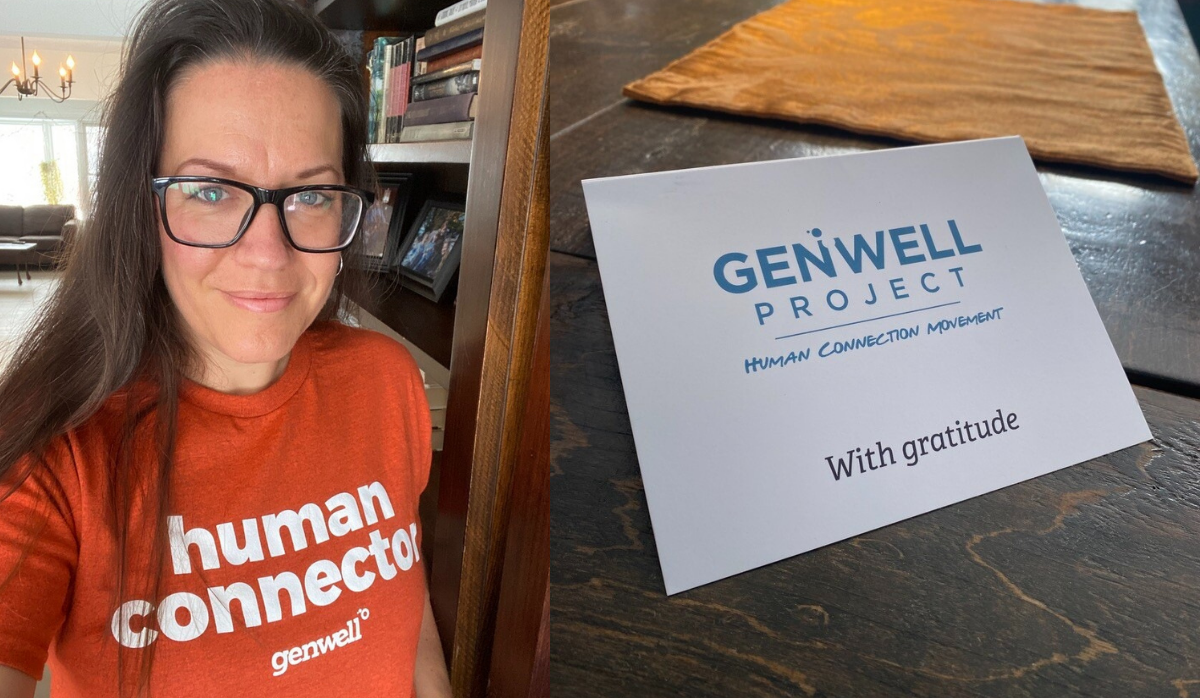
Tasha Van Vlack Sharing GenWell’s Meaningful Swag and Handwritten Note
Conclusion:
Taken together, these stories reinforce something many of us in fundraising know to be true. When stewardship becomes personal, it becomes meaningful. The moments donors remember most are rarely elaborate recognition strategies. More often, it is the handwritten note, the genuine conversation, or the chance to connect directly with the people and communities their support is helping to serve.
Several of these stories highlight the power of recognition with no immediate ask attached. Simply taking the time to say thank you, listen, and acknowledge someone’s role in the mission can strengthen a relationship in ways that no campaign tactic ever could. Stewardship at its best creates space for donors to feel seen, appreciated, and connected to something larger than a single transaction.
Perhaps most importantly, great stewardship invites people into community. It brings supporters closer to the work, to one another, and to the purpose that inspired their giving in the first place. When donors feel that sense of belonging and shared impact, philanthropy stops feeling transactional and starts feeling human.
Thank you to everyone who contributed to this article. I truly appreciate you taking the time to share your experiences and insights, and for helping to advance the field of fundraising.
About the Author:
Mike is the Founder and Lead Fundraising Strategist of Mike Esposito Fundraising, a consultancy that helps social service and community focused nonprofits grow individual giving and build sustainable donor revenue. A CFRE-certified strategist and coach, Mike partners with executive directors and fundraising leads to strengthen stewardship, clarify donor strategy, and create systems that make donor engagement consistent and manageable. His work includes individual giving strategy, donor communications, stewardship, portfolio development, and board coaching, helping nonprofits build practical fundraising programs that last.