

Sometimes, You Have to Take the Doors Off
By: Mike Esposito, CFRE
Over the weekend, I helped my mom clear out our childhood home. Like most families who have lived in the same house for decades, we were not just packing boxes. We were confronting the physical evidence of past decisions. In our case, that evidence came in the form of bulky exercise equipment from the 1980s and 1990s that, at first glance, seemed impossible to remove from the house.
My brother-in-law and I spent hours trying to problem-solve our way out. We tested different angles, flipped machines upside down, removed what pieces we could, and repeatedly asked ourselves the same question. How did this ever get in here in the first place? The StairMaster from 1985 was the worst offender. It had clearly found a permanent home long before anyone thought about exit strategies.
At one point, my mom called down from upstairs and suggested, “Why don’t we call your dad and see? I bet he remembers how we got it in.” I brushed that off. We would figure it out. I was determined to push through and convinced there had to be a simpler solution that did not involve slowing down or retracing old steps.
Eventually, my mom talked to my dad anyway. And, of course, he remembered exactly what they had done all those years ago. To get the equipment into the house, they had taken it apart and removed multiple doors entirely. Hinges, frames, all of it. The solution was not clever maneuvering. It was structural change.
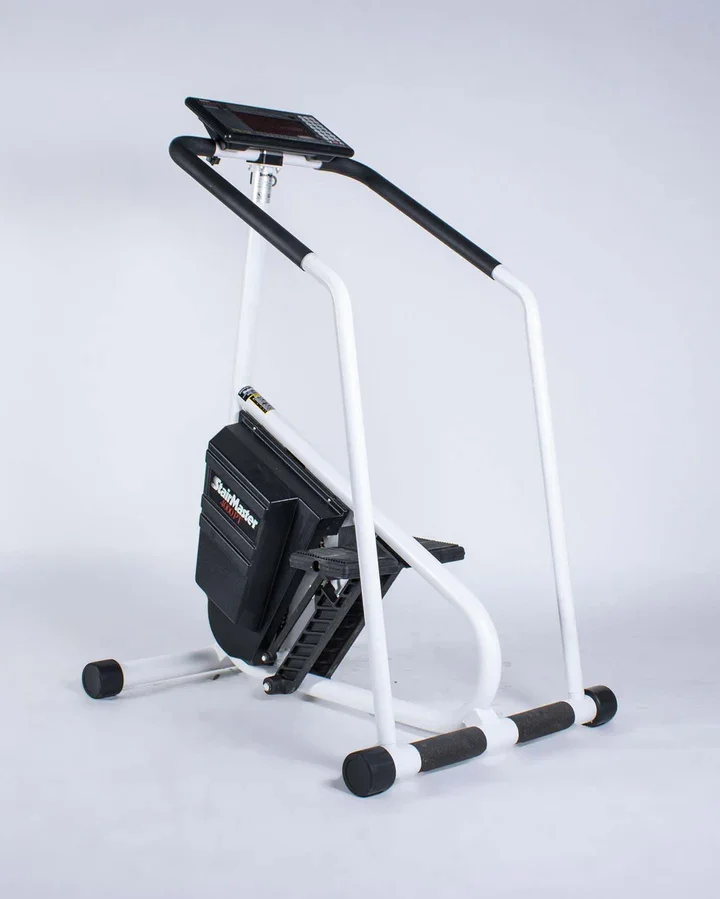
The StairMaster 4000PT Stepper that Took 3 Hours to Move 10 Feet
Looking back, what strikes me most is how obvious the solution was once we paused long enough to see it. We were so focused on pushing forward and getting the job done that we never widened our field of vision. It took someone who was not in the middle of the struggle, someone with historical context and a different perspective, to help us see what we were missing.
Once we accepted that reality, everything shifted. We removed doors, used an adjacent bathroom as a pivot point, disassembled the equipment properly, and after hours of effort, finally got that StairMaster out of the house.
That experience stuck with me because I see this exact pattern play out in nonprofit fundraising all the time.
Nonprofit leaders are often overwhelmed– deep in the weeds, and wearing far too many hats. While juggling staff, programs, boards, and donors, it can be hard to step back long enough to recognize that the solution might already be right in front of you. Instead, the instinct is often to keep working at that same problem,the same way, even if it refuses to resolve. Or leaders might see that a bigger move is going to be necessary, but also see that it’s going to be really hard. So they delay, favoring small tweaks and minor adjustments that will be less disruptive– but won’t actually solve the problem.
But sometimes, that big structural change is the only way to move forward– like in the case of my mom’s vintage StairMaster. Then, leaders face the dual challenge of intentionally stepping back and seeing the bigger picture, and then finding the will to act on what they see.
Sometimes it is not about having all the answers internally, but about inviting perspectives that help you see the full picture more clearly. Seek that deep institutional knowledge (like the person who got the StairMaster into the house in the first place) that will provide a larger context. Or bring in a fresh set of eyes, and a wider perspective informed by innovation and creativity.
And then the way forward becomes clear. It might look like investing in a new staff role, or focusing on a new category of donor. It may mean reimagining or even abandoning an event that is no longer making money, or rethinking long-standing practices that are no longer serving the mission well. It could mean launching a campaign on a novel but well-considered timeline.
Stressful? At first, yes. But time and again, I have seen that the organizations willing to broaden their perspectives and make those bigger structural shifts are the ones that break through revenue plateaus. They stop trying to force solutions through doorways that were never built for growth and instead create the space they actually need to move forward.
Sometimes, the answer is not to push harder.
Sometimes, you have to take the doors off.

About the Author:
Mike is the Founder and Lead Fundraising Strategist of Mike Esposito Fundraising, a consultancy that helps social service and community focused nonprofits grow individual giving and build sustainable donor revenue. A CFRE-certified strategist and coach, Mike partners with executive directors and fundraising leads to strengthen stewardship, clarify donor strategy, and create systems that make donor engagement consistent and manageable. His work includes individual giving strategy, donor communications, stewardship, portfolio development, and board coaching, helping nonprofits build practical fundraising programs that last.